
Play Plane Game Gambling Now!
Home → Auto Cashout
Plane Game Auto Cashout
Auto cashout in Plane Game
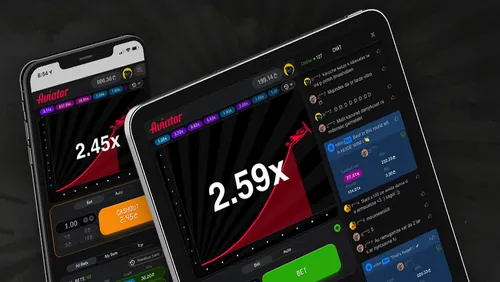
The auto cashout feature allows a player to pre-set a specific multiplier threshold for their bet in Spribe's Plane Game. This function removes the need for manual intervention during the round, which is critical given the high volatility of the title. Consequently, players can secure winnings automatically before the plane crashes, eliminating reaction-time errors that often lead to total loss.
This automation does not alter the underlying house edge of 3.00% inherent in the game's mathematical model. The theoretical return remains at 97.00% regardless of whether the player uses manual controls or the automatic setting. Therefore, the strategy shift lies solely in execution speed rather than any improvement to the expected value over time.
Setting a target multiplier
A player must input a numerical value into the auto cashout field before the round begins in Plane Game. This target determines the exact multiplier at which the system will withdraw the stake and profit. Setting this parameter requires an understanding of the exponential distribution governing crash points across thousands of rounds.
Low targets such as 1.50x offer higher frequency but smaller gains, while high targets like x10 yield rare but larger payouts. The choice depends on the player's risk tolerance regarding the 3.00% house edge. There is no guaranteed path to profit, only a selection of statistical probabilities defined by the studio Spribe.
Why automation removes hesitation
Hesitation during a rising multiplier in Plane Game often results in missing the optimal exit point before the crash. The auto cashout mechanism executes the withdrawal instantly when the predefined condition is met, bypassing human delay. This ensures that the theoretical return of 97.00% is approached more consistently by disciplined players.
Low targets versus high targets
Choosing a low target multiplier in Plane Game increases the probability of winning small amounts frequently due to the game's volatility. Conversely, aiming for a high target reduces win frequency but maximizes potential payout per successful round. Players must balance these extremes against the fixed 3.00% house edge provided by Spribe.
Auto bet alongside auto cashout
The dual bet feature in Plane Game allows two simultaneous wagers, each with its own auto cashout settings. This enables a hybrid strategy where one bet secures early profits while the other chases a higher multiplier. Such configuration manages the 97.00% RTP by diversifying exposure to different crash points within the same session.
Plane Game: key facts
| Parameter | Value |
|---|---|
| Game | Plane Game |
| Studio | Spribe |
| Released | 2019 |
| RTP | 97.00% |
| House edge | 3.00% |
| Volatility | high |
Choosing a cashout target
The Plane Game by Spribe features a theoretical RTP of 97.00%, which establishes the long-term return expectation for players engaging with this crash mechanic. This percentage indicates that the house edge remains fixed at 3.00% regardless of the chosen multiplier or timing strategy employed during the round. Consequently, selecting a specific cashout target does not alter the underlying mathematical advantage held by the casino over extended play sessions. Players must accept that variance will occur even when targeting consistent low multipliers.
Frequency against payout size
Spribe designed Plane Game with high volatility, meaning winning rounds are less frequent but offer larger potential returns compared to lower-risk strategies in other titles. This contrasts sharply with Dice, which offers an adjustable volatility setting and a maximum win cap of x970, providing different risk management options for users. The exponential distribution of crash points ensures that most rounds end at low multipliers, requiring patience from those chasing significant payouts. Understanding this frequency is crucial for managing bankroll expectations effectively.
Testing targets in demo
Plane Game launched in 2019 and includes provably fair technology, allowing players to verify the randomness of each round's crash point independently. This transparency helps users test various auto-cashout strategies without financial risk before committing real funds to live multiplayer sessions. While some operators may configure lower RTP versions like 96% or 94%, the standard 97.00% version provides the best theoretical value for testing. Demo modes typically mirror these mechanics, enabling safe experimentation with dual bets.
Adjusting after a losing streak
When facing a losing streak in Plane Game, players might consider increasing bet sizes, though the 3.00% house edge persists regardless of stake adjustments. Unlike slots where paylines influence outcomes, this crash game relies entirely on the random multiplier climb, making recovery strategies purely mathematical rather than pattern-based. Some casinos offer bonus terms like a 300% welcome bonus up to €2,000, which can provide additional buffer during volatile periods. However, wagering requirements on such bonuses often restrict how quickly funds can be withdrawn after losses.
When to turn automation off
Auto cashout features in Plane Game remove reaction time from the outcome, ensuring consistent execution of predetermined targets without emotional interference. Disabling automation allows manual intervention when the multiplier approaches desired levels, potentially capturing higher values if the player reacts faster than the system threshold. This manual approach introduces human error risks, whereas automated settings maintain discipline aligned with the game's high volatility profile. Operators may also impose limits on simultaneous bets, affecting how many automated strategies can run concurrently.
Double bet setups
Plane Game allows a maximum of two simultaneous bets per round, enabling players to split their exposure across different strategies while the multiplier climbs from 1.00x. This dual-bet mechanism lets one wager chase a low crash point for steady returns while the second targets higher volatility, optimizing the 97.00% theoretical return over time. The developer Spribe designed this feature to accommodate varied bankroll management styles within a single session without compromising the core crash mechanic.
Theoretical RTP of 97.00% applies to the total stake placed during each round, regardless of whether the player uses one or two active betting lines simultaneously. Operators may configure lower RTP values such as 96% or 94%, which directly increases the house edge and reduces long-term payout expectations for all combined wagers. Players must verify the specific game version before playing, as the configured percentage determines the actual mathematical advantage held by the casino in every single round.
Around Tower Rush by Galaxsys offers a max win cap of 100x, providing a fixed ceiling that contrasts with Plane Games unlimited upside potential when cashing out early. While Tower Rush limits the reward structure to a predefined multiple, Plane Game allows winnings to scale infinitely based on the multiplier reached before the crash event occurs. This structural difference means strategic betting in Plane Game requires careful consideration of risk tolerance rather than relying on a capped payout model for security.
Splitting stakes across two bets
Players can allocate distinct stake amounts to each of the two available bet slots, allowing for precise control over risk distribution during high-volatility rounds in Plane Game. One bet might use an auto-cashout at 2.00x for guaranteed small profits, while the second remains manual to capture larger multipliers if the plane ascends further. This approach leverages the 3.00% house edge more efficiently by balancing frequent small wins against occasional large payouts within the same round structure.
The optional auto-cashout feature closes a bet automatically at a chosen multiplier, removing reaction time from the outcome but not changing the built-in mathematical edge of the game. By setting different thresholds for each bet, players can ensure partial capital recovery even if the plane flies away unexpectedly at low multipliers like 1.50x. This strategy does not alter the exponential distribution of crash points but helps manage variance by securing some returns before the random termination event happens.
In contrast, Tower Rush by Galaxsys caps its maximum win at 100x, limiting the upside potential compared to Plane Game where rewards depend entirely on timing the cash-out correctly. While Tower Rush provides a predictable upper bound for earnings, Plane Game requires players to make active decisions about when to lock in profits versus chasing higher multipliers. The lack of a hard cap in Plane Game makes stake splitting a more complex but potentially more rewarding strategy for experienced users managing their bankroll.
Combining a safe and a risky target
A common strategy involves pairing a conservative auto-cashout target with a more aggressive manual bet, exploiting the high volatility inherent in Plane Games crash mechanics. The safe bet might cash out at 1.50x to cover the total stake, while the risky bet aims for multipliers above 5.00x to generate significant profit if the round sustains growth. This combination utilizes the 97.00% RTP framework to balance frequency of wins against the magnitude of payouts across numerous rounds played over time.
The theoretical return of 97.00% represents a long-run average over hundreds of thousands of spins, meaning short-term results will vary significantly due to the exponential distribution of crash points. Players combining safe and risky targets must accept that the house edge of 3.00% ensures the casino retains a portion of all wagers regardless of individual round outcomes. Understanding this statistical reality helps players avoid chasing losses by assuming that a winning strategy can permanently overcome the built-in mathematical disadvantage in any session.
Tower Rush by Galaxsys features a maximum win cap of 100x, which simplifies risk assessment by providing a clear upper limit on potential rewards compared to Plane Games open-ended structure. While Plane Game allows for unlimited gains depending on when the player chooses to cash out, Tower Rush forces players to adapt to a fixed reward ceiling regardless of performance. This fundamental difference influences how players should adjust their betting patterns, with Plane Game requiring more dynamic decision-making to maximize value from each round played.
Limits of any automated plan
Auto-cashout settings in Plane Game remove human reaction time from the equation, ensuring consistent execution of pre-defined strategies but failing to account for real-time visual cues of the rising multiplier. While automation enforces discipline, it cannot predict the exact moment the plane will fly away, which is randomly generated each round using an exponential distribution algorithm by Spribe. Players relying solely on automation must accept that their predetermined exit points may miss higher multipliers or trigger too early during volatile swings in the game flow.
The house edge of 3.00% remains constant regardless of whether players use manual controls or automated plans, meaning no strategy can eliminate the mathematical disadvantage inherent in the game design. Operators may offer configurations with RTPs as low as 94%, further reducing the expected return for players who believe automation guarantees long-term profitability through sheer consistency. Understanding these fixed parameters helps players recognize that automation is a tool for execution speed rather than a method for altering the underlying odds of winning each round.
Unlike Tower Rush by Galaxsys which caps maximum wins at 100x, Plane Game offers unlimited potential but requires precise timing that automation cannot always replicate under pressure. Automated plans excel at enforcing strict rules but struggle with the nuanced decision-making needed to capitalize on rare high-multiplier rounds that define the games high volatility profile. Players should view automation as a supplement to their strategy rather than a replacement for active engagement, especially when navigating the unpredictable nature of crash events in real-time gameplay.
What automation cannot fix
No automated system can overcome the 3.00% house edge embedded in Plane Games 97.00% theoretical RTP, as the mathematical advantage favors the casino over any number of rounds played. Even with perfect execution of auto-cashout strategies, the exponential distribution of crash points ensures that losses will accumulate over time due to the inherent randomness of the game mechanics. Players must recognize that automation manages risk exposure but does not alter the fundamental probability distribution governing when the plane flies away during each independent round event.
The developer Spribe designs Plane Game with high volatility, meaning outcomes are skewed toward frequent small crashes rather than steady growth, challenging any rigid automated betting plan. While auto-cashout features provide safety nets at specific multipliers, they cannot prevent the inevitable impact of the house edge during extended sessions where variance inevitably aligns with statistical expectations. Players using automation should focus on bankroll preservation rather than expecting consistent profits, as the game structure prioritizes entertainment value over sustainable winning patterns for most participants.
Tower Rush by Galaxsys limits maximum wins to 100x, offering a structured environment where automated strategies can be evaluated against a known ceiling unlike Plane Games open-ended reward system. In Plane Game, automation fails to address the psychological challenge of deciding when to stop chasing higher multipliers after a series of successful cash-outs at lower levels. This limitation highlights why manual oversight remains crucial for adjusting tactics dynamically, as rigid algorithms cannot adapt to the unique behavioral pressures created by the games crash mechanic and potential for rapid loss accumulation.
DemoRTP & VolatilityHow to PlayAuto CashoutStrategyBonusesMobileDownload & AppMax WinSimilar GamesReviewFAQSitemap
Plane Game Gambling 2026